Why Choose Crystalline Powder Xylitol for Global Sourcing?

Choosing Crystalline Powder Xylitol for global sourcing requires more than comparing price lists. Buyers need consistent specifications, dependable documentation, and practical supply-chain support. In food, oral-care, and pharmaceutical-related applications, powder appearance and particle size can affect handling, blending, and packaging performance. Small differences matter.

Experienced procurement teams usually review purity data, moisture levels, mesh size, microbiological results, and batch consistency. A reliable supplier should provide a clear Certificate of Analysis for each lot. Traceability matters too. From production records to sealed cartons, every step should remain easy to verify. Independent laboratory testing can strengthen confidence when projects involve multiple markets.

Crystalline Powder Xylitol also offers practical logistics advantages. Its dry, uniform form can support accurate weighing and efficient formulation. Proper moisture protection is essential during storage and transport. Damaged packaging can undermine an otherwise acceptable batch. That detail is easy to overlook.

Global sourcing still involves uncertainty. Freight delays happen. Specifications may be interpreted differently. A supplier may appear capable but lack responsive technical support. Buyers should request samples, compare production batches, and confirm export documentation before committing to large volumes. No ingredient is perfect. That reality deserves attention.

The strongest sourcing decision balances quality, cost, compliance, and long-term communication. Suppliers with documented quality systems, transparent testing practices, and relevant industry experience are easier to assess. They also help buyers respond when requirements change. For this reason, Crystalline Powder Xylitol can be a practical option for international supply programs, provided its quality and handling conditions are verified carefully.
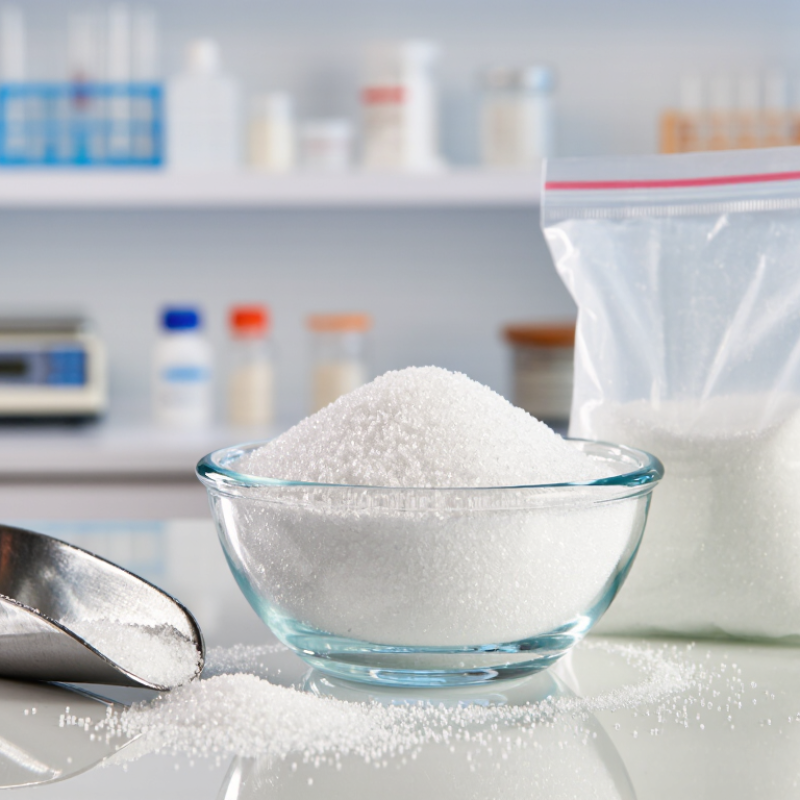
Why Choose Crystalline Powder Xylitol for Global Sourcing?

Xylitol Profile: E967, CAS 87-99-0, and 152.15 g/mol

Why Choose Crystalline Powder Xylitol for Global Sourcing?

Xylitol has a clear technical identity. The FAO/WHO Joint Expert Committee on Food Additives lists it as INS 967, while European food-additive legislation identifies it as E967. PubChem records CAS 87-99-0 and a molar mass of 152.15 g/mol. These figures help buyers match certificates, customs documents, and laboratory results across markets. Crystalline powder also offers visible handling advantages. Uniform particles can support accurate weighing, blending, and controlled filling. However, crystal appearance alone does not prove quality.

A reliable sourcing review should examine assay, moisture, particle-size distribution, microbiological limits, heavy metals, and packaging integrity. JECFA specifications provide a useful reference for identity and purity checks. Regional rules may still differ, so one specification cannot answer every import question. That is an easy mistake to make. The Global Food Safety Initiative benchmarking framework also emphasizes documented supplier controls, traceability, and verification. These details matter when pallets travel through humid ports or remain in warehouses for weeks.

Tips: Request a current certificate of analysis for each lot. Compare CAS, E967, assay, and moisture values. Ask for a retained sample before signing a long-term contract. Check whether the powder remains free-flowing after transport simulation. A practical weakness remains: laboratory data may look precise, while storage conditions quietly reduce performance. Record temperature, humidity, lot number, and packaging type during evaluation. Use independent testing when results appear unusually perfect.

Why Choose Crystalline Powder Xylitol for Global Sourcing? - Xylitol Profile: E967, CAS 87-99-0, and 152.15 g/mol
Data Dimension Xylitol Profile Sourcing Relevance
Product Form White crystalline powder or granules A dry, free-flowing form is suitable for blending, filling, tableting, and controlled portioning.
Chemical Name Xylitol A five-carbon sugar alcohol, also known as a polyol.
Food Additive Number E967 The European food additive designation for xylitol.
CAS Registry Number 87-99-0 A globally recognized chemical identifier for product documentation and customs or regulatory checks.
Molecular Formula C5H12O5 Provides a consistent chemical reference for technical specifications and quality documents.
Molecular Weight 152.15 g/mol Useful for formulation calculations, analytical testing, and international technical communication.
Typical Appearance White to almost white, crystalline, odorless solid Supports clean-label visual expectations in food, oral-care, and pharmaceutical applications.
Sweetness Profile Approximately equal to sucrose by sweetness intensity Allows replacement or partial replacement of sucrose in many formulation systems.
Sensory Character Sweet taste with a noticeable cooling sensation Particularly suitable for chewing gum, mints, oral-care products, and selected confectionery applications.
Melting Range Approximately 92–96 °C Important for thermal processing, storage conditions, and product stability assessments.
Water Solubility Approximately 169 g/100 mL of water at 25 °C High solubility supports use in syrups, beverages, liquid concentrates, and rapidly dissolving products.
Energy Value Approximately 2.4 kcal/g, subject to local labeling rules Relevant for reduced-sugar and calorie-conscious product development.
Glycemic Response Generally low compared with sucrose; reported values vary by study and serving May support low-sugar formulation strategies, while nutrition claims must be verified for the target market.
Tooth-Friendly Positioning Non-cariogenic polyol commonly used in oral-care products Useful for sugar-free chewing gum, mints, toothpaste, mouth-rinse, and dental-care formulations, subject to local claim requirements.
Common Applications Chewing gum, confectionery, oral care, dietary supplements, and selected pharmaceutical formulations Broad application coverage can support diversified sourcing and product development programs.
Handling Consideration Store tightly closed in a cool, dry place and protect from moisture Moisture control helps preserve powder flow, appearance, and processing performance during international transport.
Quality Documents to Request Specification sheet, certificate of analysis, safety data sheet, allergen statement, and regulatory documentation These documents help verify identity, purity, batch conformity, food-grade suitability, and destination-market compliance.
Note: Physical properties and quality limits may vary by grade, test method, moisture content, and applicable regional regulations. Confirm the current specification before commercial purchase.

Crystalline Powder Grades: Typical ≥99% Assay and Controlled Moisture

Why Choose Crystalline Powder Xylitol for Global Sourcing?

Crystalline powder xylitol offers measurable consistency during international procurement. Typical commercial grades specify an assay of at least 99%, supporting predictable formulation performance. JECFA specifications list xylitol purity at not less than 98% and water at not more than 0.5%. The Food Chemicals Codex reports a tighter assay range of 98.5–101.0% on a dried basis.

Moisture control deserves equal attention. Excess water can create caking, slow discharge, and alter the powder’s texture inside a sealed bag. A dry, free-flowing sample should remain loose after gentle handling. It should not form hard lumps near the liner or corners. Karl Fischer testing can provide a more reliable moisture result than visual inspection alone. Small testing differences matter.

Global demand is also expanding. Grand View Research estimated the global xylitol market at about USD 1.06 billion in 2023, with projected growth through 2030. However, market reports use different product boundaries, so their figures are not perfectly comparable. This is an important limitation. Buyers should request a current certificate of analysis, batch-specific assay, moisture results, particle-size data, and packaging details. Supplier experience matters, but documents reveal more. A ≥99% assay claim without a defined test basis can still create confusion.

Nutrition Data: 2.4 kcal/g Energy Value and Glycemic Index of 7

Why Choose Crystalline Powder Xylitol for Global Sourcing?

Crystalline powder xylitol offers a clear nutrition profile for international product development. It provides approximately 2.4 kcal per gram, according to widely used polyol labeling guidance. That is about 40% less energy than sucrose, which supplies 4 kcal per gram. The University of Sydney’s Glycemic Index database lists xylitol at a GI of 7. This low value may support formulations designed to reduce rapid blood-glucose responses.

The number matters.

However, glycemic response can vary with serving size, food structure, and individual metabolism. GI should guide decisions, not replace clinical judgment. A procurement team should request a current certificate of analysis for every production lot. Useful checks include assay, moisture, particle size, microbiological results, and contaminant testing. Traceability also matters when shipments cross several jurisdictions.

Crystalline form improves handling during weighing and blending. Uniform particles can reduce segregation in powdered applications. Still, “uniform” should be verified, not assumed. Suppliers should provide sampling methods and storage data, especially for humid routes. Nutrition values may also require local regulatory review before label approval. A reliable sourcing process connects the 2.4 kcal/g energy value and GI 7 reference with laboratory evidence, documented specifications, and realistic quality controls.

Quality Standards: FCC, JECFA, EU E967, and Microbial Testing

Why Choose Crystalline Powder Xylitol for Global Sourcing?

Crystalline powder xylitol offers consistent handling in beverage, confectionery, and oral-care applications. Its clean crystals can support accurate weighing and predictable blending. However, appearance alone does not prove quality. A reliable sourcing review should compare each lot with recognized specifications and practical test data.

The FCC monograph provides useful criteria for identity, assay, water content, and related quality attributes. JECFA specifications add an internationally respected reference for food-grade evaluation. For European distribution, buyers should check compliance with the current EU E967 requirements and the intended application. These standards support confidence, but they are not identical. A certificate may look complete while missing a test important to your process.

Microbial testing deserves close attention. Request results for total plate count, yeast and mold, and relevant pathogens. Testing methods, sampling dates, and acceptance limits should be clearly recorded. Lot numbers must connect the test report, packaging, and production record.

I also examine moisture, particle size, and storage conditions because powder behavior can change during transport. Small details matter. Still, no checklist is perfect. Testing frequency, local regulations, and product use may require adjustment. Buyers should verify current requirements with qualified regulatory professionals before approving global shipments.

Global Sourcing Factors: Capacity, Particle Size, Packaging, and Landed Cost

Why Choose Crystalline Powder Xylitol for Global Sourcing?

Global sourcing begins with dependable capacity, not a single attractive quotation. Buyers should review monthly output, production schedules, reserve inventory, and realistic lead times. A supplier may quote high capacity, yet consistent lot delivery matters more. Request recent certificates of analysis, batch records, and traceability details. An independent sample check can confirm purity, moisture, and microbiological specifications. Do not rely only on paperwork.

Particle size directly affects blending, dissolution, dust, and filling performance. A narrow sieve range can support better process control. However, the ideal range depends on the finished application. Test the powder under actual factory conditions, including humidity and mixing speed. Small differences can become expensive. Packaging also deserves technical attention. Moisture-resistant inner liners, strong outer bags, pallet stability, and clear batch markings reduce handling risks. Common pack sizes may improve warehouse planning, but container utilization should be checked carefully.

Landed cost includes more than the product price. Add ocean or air freight, insurance, duties, port fees, inland transport, inspection, storage, and currency movement. A lower quotation may lose its advantage after demurrage or repacking costs. Compare suppliers using the same delivery basis and shipment volume. A spreadsheet helps, but it can still mislead. I have seen calculations overlook seasonal freight changes and damaged-pallet claims. Build a modest contingency and review it with logistics and quality teams. Supplier audits, retention samples, and written change-notification procedures strengthen reliability over time.

Why Choose Crystalline Powder Xylitol for Global Sourcing?

Global sourcing benchmarks for capacity, particle size, packaging efficiency, and landed cost. The index uses a 100-point reference based on commonly traded food-grade crystalline xylitol specifications.

Typical benchmarks include production capacity of approximately 20,000–50,000 metric tons per year, particle sizes commonly supplied around 200–800 microns, standard 25 kg bags, and indicative sea-freight landed costs of approximately US$1.80–2.80 per kg. Higher capacity can improve continuity of supply, consistent particle size supports processing performance, standardized packaging reduces handling complexity, and landed cost should include freight, duties, insurance, and local delivery.