7 Tips for Buying Xylitol Toothpaste Tablets?

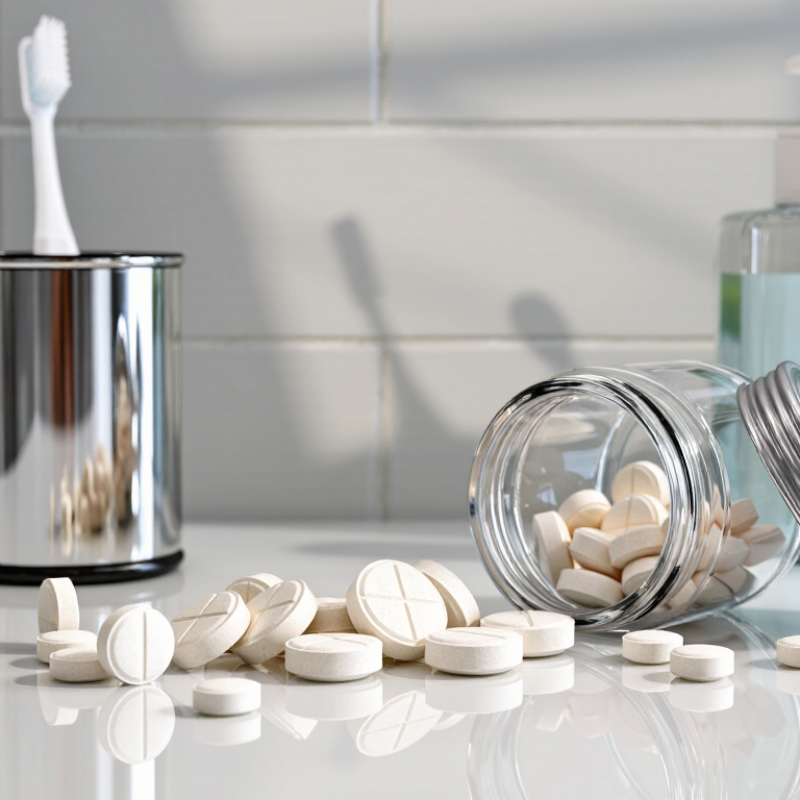
Buying Xylitol Toothpaste Tablets can look simple, especially when every package promises freshness, convenience, and a cleaner routine. Yet small differences matter. Tablet size, xylitol content, fluoride, abrasives, flavoring, and packaging can change the daily experience. A tablet that feels chalky may remain untouched in your bathroom drawer. Convenience only helps when you will actually use it.

Dr. Nigel Carter OBE, an oral-health expert, has said, “Good oral health is fundamental to our general health and well-being.” That reminder keeps this purchase in perspective. Xylitol may support an oral-care routine, but it does not automatically replace brushing technique, professional advice, or suitable fluoride protection. Evidence can also vary between products, and marketing language is sometimes stronger than the research behind it. That deserves a careful pause.

These seven tips focus on practical details. Check whether the tablets contain fluoride and identify the exact amount. Read the full ingredient list, especially if you have sensitivities. Consider the tablet’s texture, dissolving speed, flavor, and aftertaste. Examine the container for moisture protection and clear usage instructions. Look for transparent information about xylitol quantity, manufacturing standards, and independent quality testing. Think about your needs during travel, workdays, or limited bathroom storage. Ask a dentist or hygienist when you have decay concerns, dry mouth, braces, or unusual sensitivity.

A perfect tablet may not exist. The better choice is the one that fits your mouth, habits, health needs, and evidence-based expectations.

7 Tips for Buying Xylitol Toothpaste Tablets?

Understanding Xylitol Toothpaste Tablets and Their Oral Care Benefits

7 Tips for Buying Xylitol Toothpaste Tablets

Understanding Xylitol Toothpaste Tablets and Their Oral Care Benefits

Xylitol toothpaste tablets are compact, water-free alternatives to traditional toothpaste. They usually contain xylitol, a sweetener that does not feed acid-producing oral bacteria in the same way as sugar. Some studies suggest xylitol may support saliva flow and help reduce acid exposure. However, results depend on brushing habits and the complete formula. It is easy to overstate one ingredient’s benefits.

Tip 1: Check the ingredient list. Look for xylitol near the beginning. Tip 2: Confirm fluoride content if cavity prevention is your priority. Not every tablet contains fluoride. Tip 3: Choose a texture that breaks down comfortably. A gritty tablet may discourage regular brushing. Tip 4: Review flavoring ingredients if your mouth feels sensitive. Small details matter.

Tip 5: Consider packaging for travel. Moisture-resistant containers help tablets remain firm. Tip 6: Follow the suggested amount instead of using extra tablets. More xylitol does not automatically mean better protection. Tip 7: Store tablets away from pets. Xylitol can be dangerous for dogs, even in small amounts. A dental professional can help match the product with your needs, especially if you have frequent cavities, dry mouth, or gum problems. These tablets can simplify routines, but they do not replace thorough brushing, cleaning between teeth, and regular dental care.

7 Tips for Buying Xylitol Toothpaste Tablets? - Understanding Xylitol Toothpaste Tablets and Their Oral Care Benefits

Tip What to Check Practical Benchmark or Fact Why It Matters for Oral Care Buying Question
1. Confirm the active ingredients Check whether the tablets contain fluoride, xylitol, or both. Fluoride is the established ingredient for helping prevent and control dental caries. Xylitol is a sugar alcohol used as a sweetener and may support a lower-acid oral environment. Xylitol does not replace fluoride when cavity prevention is the main goal. Product formulas differ, so the ingredient panel is essential. Does the product provide the active ingredient recommended for my dental needs?
2. Review the fluoride level Look for the fluoride compound and concentration on the packaging. Many adult fluoride toothpastes contain approximately 1,000–1,500 ppm fluoride, but concentrations and regulations vary by market. A suitable fluoride concentration can help strengthen enamel and reduce the risk of tooth decay when used as directed. Is the fluoride concentration clearly stated and appropriate for the intended user?
3. Check the xylitol position in the ingredient list Compare the amount or position of xylitol with other sweeteners and fillers. Ingredients are generally listed in descending order by weight, although labeling rules can vary. A higher position indicates a relatively larger amount, not a guaranteed clinical dose. This helps distinguish a product that meaningfully uses xylitol from one that contains only a small amount. Does the label disclose the xylitol amount or provide transparent ingredient information?
4. Evaluate abrasion and cleaning performance Look for information about abrasivity, polishing agents, texture, and how completely the tablet dissolves. A toothpaste tablet should break down into a smooth paste or slurry and should not feel excessively gritty during brushing. Effective plaque removal depends mainly on regular brushing technique and duration. Excessive abrasivity may be unsuitable for people with exposed dentin or enamel wear. Does the texture feel comfortable, and is abrasion information available for sensitive teeth?
5. Check sugar-free and dietary suitability Confirm that the tablets are free from fermentable sugars and review allergens, animal-derived ingredients, and other dietary claims. Xylitol is a sugar alcohol, not table sugar. “Vegan,” “gluten-free,” and similar claims should be verified against the full ingredient and manufacturing information. Sugar-free formulas may be useful for reducing exposure to fermentable sugars, but they still require normal brushing and dental care. Does the product match my dietary restrictions and ingredient preferences?
6. Consider safety and storage Check child-safety instructions, moisture protection, expiration information, and storage requirements. Xylitol can be highly toxic to dogs, even in relatively small amounts. Keep tablets sealed and completely out of pets’ reach. Proper storage helps preserve tablet quality and prevents accidental ingestion by children or animals. Is the container secure, moisture-resistant, and safely stored away from pets?
7. Compare usability and environmental features Assess portability, packaging materials, tablet count, cost per brushing, and disposal instructions. Toothpaste tablets can reduce the need for water during use and may be convenient for travel. Environmental impact depends on the complete package, shipping, ingredients, and disposal method. A convenient product is more likely to support consistent twice-daily brushing, but convenience should not outweigh appropriate fluoride and tolerability. Will the format make it easier to brush twice daily without creating unnecessary packaging waste?
Usage note: Chew one tablet as directed, brush with a soft-bristled toothbrush for about two minutes, and follow the product label. Spit rather than swallow fluoride toothpaste residue. People with high cavity risk, children, persistent sensitivity, or existing dental conditions should consult a dental professional before changing products.

Checking Xylitol Content and Essential Product Ingredients

Buying xylitol toothpaste tablets requires more than spotting “xylitol” on the front. Read the label. Check the amount per tablet and the serving size, because a small tablet may contain only a modest quantity. Xylitol should appear clearly in the ingredient list, not as a vague “natural sweetener.” Products with transparent percentages are easier to compare. Still, percentages can confuse shoppers when serving sizes differ. Compare milligrams or grams per tablet instead.

Look for an evidence-based active ingredient suited to your dental needs. Fluoride supports cavity prevention, while hydroxyapatite appears in some fluoride-free formulas. These ingredients are not interchangeable in every situation, so dental advice matters, especially for children or people with frequent cavities.

Helpful supporting ingredients may include calcium compounds, gentle abrasives, or flavor oils. Avoid assuming that “more natural” means safer. Strong abrasives can feel refreshing but may be unpleasant for sensitive teeth.

Inspect the full label for unnecessary dyes, harsh foaming agents, and allergens. Tablet hardness also matters; a product that crumbles before brushing can waste material. Check moisture protection, packaging quality, batch information, and a clear expiry date. Independent testing is reassuring, though it does not replace professional guidance.

One detail is easy to overlook: xylitol can be highly toxic to dogs, so store tablets securely. My own buying checklist is imperfect, but it improves when I compare ingredients, evidence, and daily usability rather than relying on attractive claims.

Evaluating Fluoride, Flavor, Texture, and Tablet Dissolution

7 Tips for Buying Xylitol Toothpaste Tablets

Tip 1: Check the fluoride level before buying. Fluoride helps strengthen enamel and prevent cavities when used correctly. Adults should follow local dental guidance, especially if they already use other fluoride products. “Natural” does not automatically mean better. Tip 2: Read the ingredient list carefully. Xylitol may support a less cavity-friendly oral environment, but it cannot replace brushing technique or regular dental visits.

Tip 3: Test the flavor with care. A strong mint can feel refreshing, yet it may irritate sensitive mouths. Mild flavors are often easier for daily use. Too sweet? That can become unpleasant after repeated brushing. Tip 4: Notice the tablet texture. It should crush easily between your teeth without feeling gritty. I prefer a smooth powder because it spreads more evenly across the gumline.

Tip 5: Observe how quickly the tablet dissolves. A tablet that needs excessive chewing may be inconvenient during travel. One that disappears instantly might provide less satisfying coverage. Add a little water if needed, then brush for about two minutes. Tip 6: Consider foam, but do not judge cleaning quality by bubbles alone. Tip 7: Try a small quantity first. Personal experience matters, and my first choice was not always the most comfortable one. If irritation, persistent dryness, or unusual sensitivity develops, stop using it and ask a dental professional for advice.

Choosing Safe, Sustainable, and Convenient Packaging Options

Buying xylitol toothpaste tablets is partly a packaging decision. Moisture can soften tablets, weaken texture, and reduce dosing accuracy. Look for sealed inner packs, clear batch details, expiry dates, and tamper evidence. Choose refill systems only when the refill pouch protects tablets properly. A pretty jar is not safer.

Check material claims carefully. The OECD’s Global Plastics Outlook reports that only 9% of plastic waste was successfully recycled in 2019. Prefer mono-material packs, fewer layers, and clear local recycling instructions. Avoid vague claims such as “eco-friendly.” Ask whether the pouch, cap, and label belong in your municipal recycling stream. Paper may look sustainable, yet moisture barriers can complicate recycling. Convenience can create waste.

Choose compact packs that prevent crushing during travel. Verify xylitol is clearly listed, especially when pets live at home. The U.S. Food and Drug Administration warns that xylitol can be highly toxic to dogs. Keep tablets inaccessible. Check fluoride information before switching. The World Health Organization recommends fluoride toothpaste for cavity prevention, while a Cochrane review found limited, low-certainty evidence for xylitol products alone. I still question whether seven small conveniences justify one difficult-to-recycle package.

Comparing Brand Quality, Price, Reviews, and Usage Instructions

When buying xylitol toothpaste tablets, inspect quality before chasing a low price. The 2022 WHO Global Oral Health Status Report estimates that oral diseases affect nearly 3.5 billion people worldwide. That makes daily prevention more important than attractive packaging. Check the xylitol amount per tablet, fluoride concentration, abrasive ingredients, batch number, and independent testing.

Fluoride still matters for cavity prevention. Xylitol alone should not be treated as a complete substitute.

Price comparisons can be misleading. Divide the package cost by the number of tablets, then calculate the cost for 30 days. Include shipping and refill packaging. A cheaper pack may contain fewer tablets. I once ignored this detail.

Reviews need similar care. Look for verified purchasers discussing tablet hardness, powder residue, taste, and moisture protection. Repeated complaints are more useful than one enthusiastic comment.

A 2015 Cochrane review found limited, low-certainty evidence for xylitol products preventing dental caries, so marketing claims deserve restraint.

Usage instructions should be specific and realistic. Many tablets require chewing, adding water, and brushing for about two minutes. Follow the product label rather than guessing.

Spit after brushing, especially when fluoride is present, and avoid swallowing large amounts. Replace tablets stored in humid bathrooms if they soften or crumble.

Ask a dental professional if you have dry mouth, braces, frequent cavities, or sensitivity. Convenience helps, but imperfect instructions can reduce the benefit.