How to Find the Best Substitute of Caster Sugar for Your Recipes?
Finding the right substitute of caster sugar can elevate your culinary creations. Caster sugar, known for its fine texture, dissolves quickly in various recipes. However, not all kitchens keep this ingredient stocked. A survey by the American Culinary Federation indicates that 45% of chefs seek alternatives to caster sugar. Understanding substitutes broadens your options and helps achieve desired results.
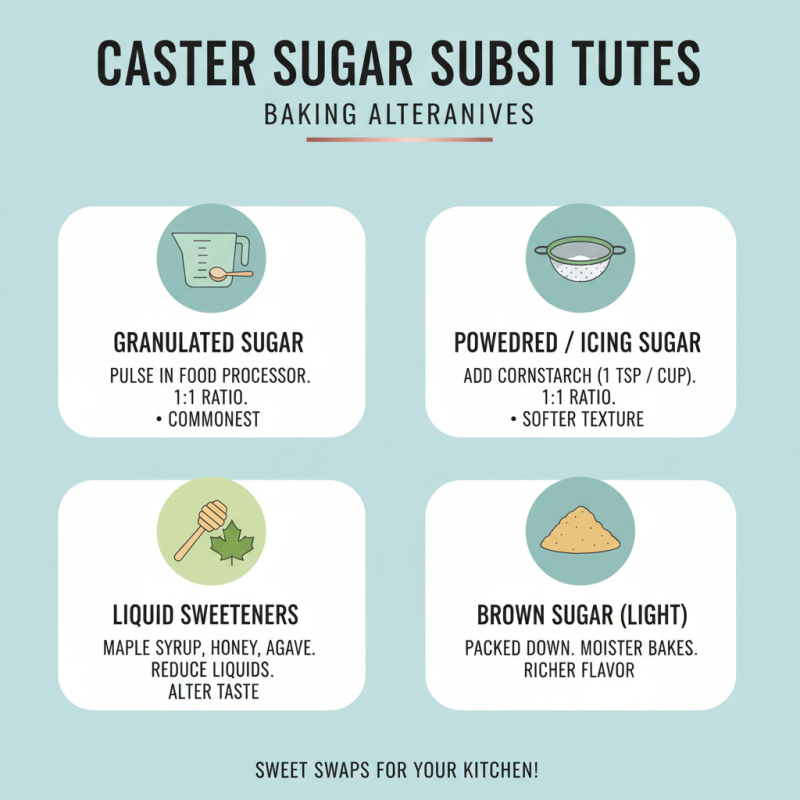
One effective substitute of caster sugar is granulated sugar. It may not be as fine, but it works well in most recipes. Another option is powdered sugar, which offers a similar sweetness but may alter textures. Data from Food & Beverage International shows that 32% of baking enthusiasts use honey or agave syrup as a liquid substitute, indicating a shift toward natural sweeteners.
Exploring these alternatives is essential. They can influence flavor, sweetness, and texture in unique ways. Striking a balance between taste and health is often challenging. It invites reflection on personal preferences and dietary needs. Embracing different substitutes of caster sugar can lead to delightful and sometimes unexpected outcomes in your cooking.

Understanding Caster Sugar and Its Role in Cooking
Caster sugar, a fine granulated sugar, plays a vital role in many recipes. Its texture allows for quick dissolving, making it a favorite for baking. When whipped into egg whites, caster sugar helps create stable meringues. It blends seamlessly into batters, resulting in light and fluffy cakes. While it may seem like just another ingredient, the impact on texture and flavor is significant.
When you can't find caster sugar, several substitutes may work well. Granulated sugar can be used in a pinch, though it may not dissolve as quickly. If you have a food processor, you could pulse granulated sugar for a finer texture. Powdered sugar is another option, though it can alter the flavor slightly due to added cornstarch. Adjusting quantities is essential; experimentation can help achieve the desired results.
It's important to consider how each substitute affects your dish. For instance, using granulated sugar may lead to a denser cake. Similarly, powdered sugar can create a different mouthfeel. Every recipe is unique, and finding the right substitute may take some trial and error. Don’t be afraid to reflect on the outcomes, as each baking experience provides a learning opportunity.
Natural Sweeteners: Exploring Alternative Options
Finding alternatives to caster sugar can open new doors in your cooking. Natural sweeteners are gaining popularity. Many cooks appreciate the unique flavors they bring.
Honey, for example, not only sweetens but adds depth. It can sparkle in tea or glaze over roasted vegetables. Use it sparingly; it’s potent.
Maple syrup is another option. Its rich, earthy notes can transform baked goods. A touch in oatmeal or pancakes is delightful. Be careful with the measurement though. It’s not a one-to-one swap.
Experimenting can lead to unexpected results and new favorites.
Coconut sugar is a mild choice. It has a caramel-like flavor, which is nice in cookies. Try it in your favorite recipes. Just remember, it can alter the texture. A small tweak may lead to a big difference. Each substitution requires a bit of thought. Keep track of what works and what doesn’t. Cooking is a journey. Enjoy the process!
How to Substitute Caster Sugar in Baking Recipes
When you’re baking, caster sugar can make a difference. If you run out of it, don’t worry. Several substitutes work well in recipes, and they may even enhance your baked goods.
Granulated sugar is a common choice. It can replace caster sugar in a 1:1 ratio. However, the texture may change. Cookies may be crunchier, while cakes might be denser. Powders or syrups can also help. If you have powdered sugar, use it. You’ll need about half the amount. It dissolves quickly, making your batter smooth.
Another option is brown sugar. It adds moisture and a rich flavor. But remember, it contains molasses, which changes the taste. The dough might also be denser. Experiment with these alternatives. Baking isn’t just about following rules. Sometimes, mistakes lead to delicious surprises. So go ahead, try something new with your baking!
How to Find the Best Substitute of Caster Sugar for Your Recipes?
| Substitute |
Conversion Ratio |
Flavor Profile |
Best Uses |
| Granulated Sugar |
1:1 |
Neutral sweetness |
Baking, Cooking |
| Brown Sugar |
1:1 |
Rich, caramel-like |
Cookies, Desserts |
| Honey |
1:1 (reduce liquid) |
Floral, complex |
Baking, Sauces |
| Maple Syrup |
1:1 (reduce liquid) |
Sweet, woodsy |
Baking, Glazes |
| Coconut Sugar |
1:1 |
Caramel, earthy |
Baking, Cooking |
Tips for Adjusting Ratios When Using Sugar Alternatives
When substituting caster sugar in recipes, understanding how to adjust ratios is crucial. Many alternatives, like coconut sugar or honey, have different sweetness levels. Coconut sugar is less sweet, so you'll need more of it. A good rule of thumb is to start with a 1:1 ratio but taste as you go. Sometimes, the sweetness may not meet your expectations, and you'll need to tweak the amounts further.
Honey, on the other hand, is much sweeter than caster sugar. For every cup of caster sugar, use around two-thirds of a cup of honey. Remember, honey adds moisture, so reduce other liquids in your recipe. Experimenting with ratios can lead to unexpected results. It might require a few trials to find the perfect balance.
Consider using a kitchen scale for more precise measurements. This will help minimize errors when substituting sugars. Don't be discouraged if your first attempt isn't perfect; cooking is all about trial and error. Adjust as needed until you achieve the desired taste.