Best Substitute For Caster Sugar What Can You Use Instead?
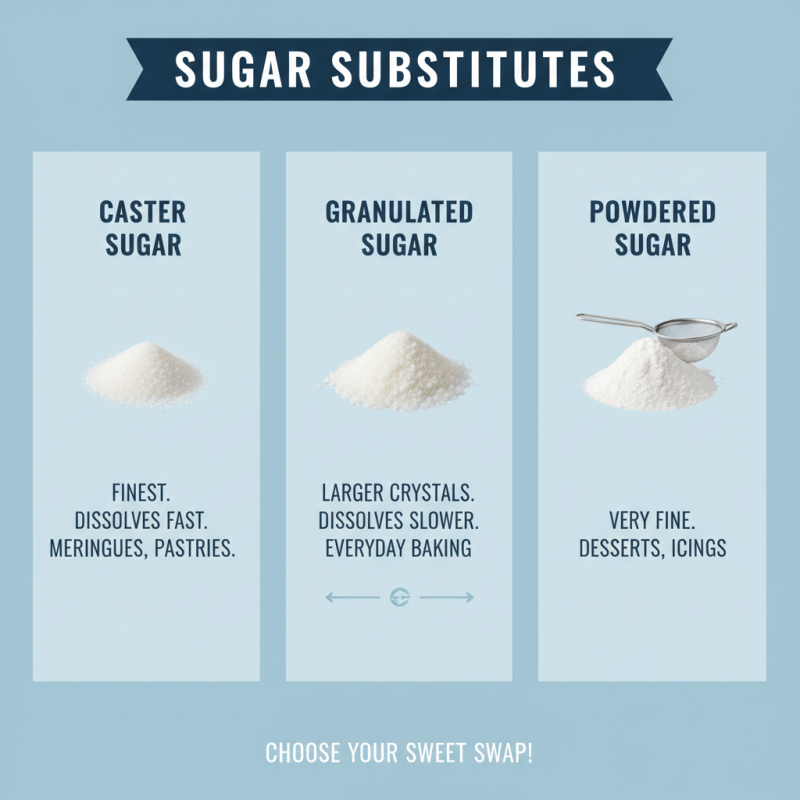
Finding the right substitute of caster sugar can be crucial for baking. Caster sugar is finer than granulated sugar. This texture helps it dissolve quickly in recipes. But what if you run out or need an alternative?
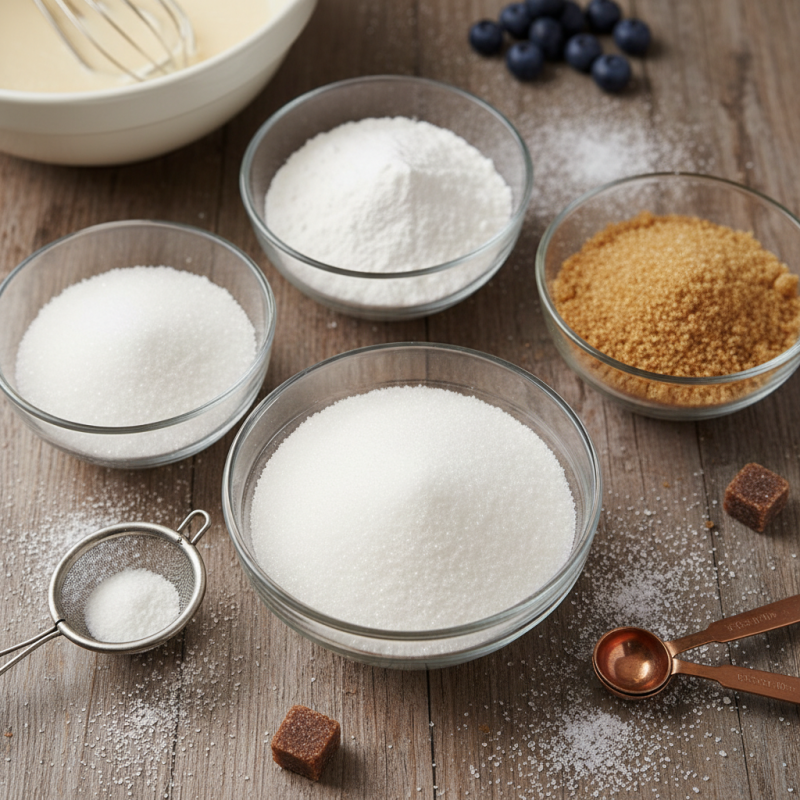
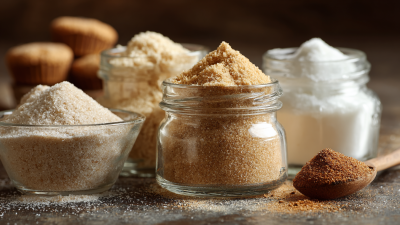
There are several potential substitutes that can work well. You might consider using granulated sugar, but it could change the texture slightly. Another option is powdered sugar, which dissolves easily but may add a different flavor. Brown sugar could also serve as an alternative, providing a richer taste.
When looking for a substitute of caster sugar, it's important to recognize personal taste. Each option has its own unique characteristics. Remember, experimenting can lead to unexpected results. Sometimes, the best substitution can turn a recipe into something extraordinary.
Best Substitute for Caster Sugar: An Overview of Alternatives
When it comes to baking, caster sugar plays a vital role. However, not everyone has it on hand. Luckily, there are alternatives. Granulated sugar is a common substitute. It can be ground finely to mimic caster sugar’s texture. Studies show that granulated sugar can work effectively in most recipes where caster sugar is required.
Another option is brown sugar. It adds moisture and a slight caramel flavor. Research indicates that brown sugar can enhance the taste profile of baked goods. This is particularly true for cookies and cakes. However, it may alter the final texture, making them denser than intended.
For those seeking healthier alternatives, coconut sugar is worth considering. It has a lower glycemic index. However, it can affect the color and flavor of your dish. Some bakers might hesitate to use it in delicate desserts. Each substitute has its pros and cons. Understanding these nuances is key to successful baking.
Best Substitute For Caster Sugar
This chart illustrates the effectiveness and popularity of various substitutes for caster sugar based on culinary preferences.
Understanding Caster Sugar: Composition and Uses in Baking
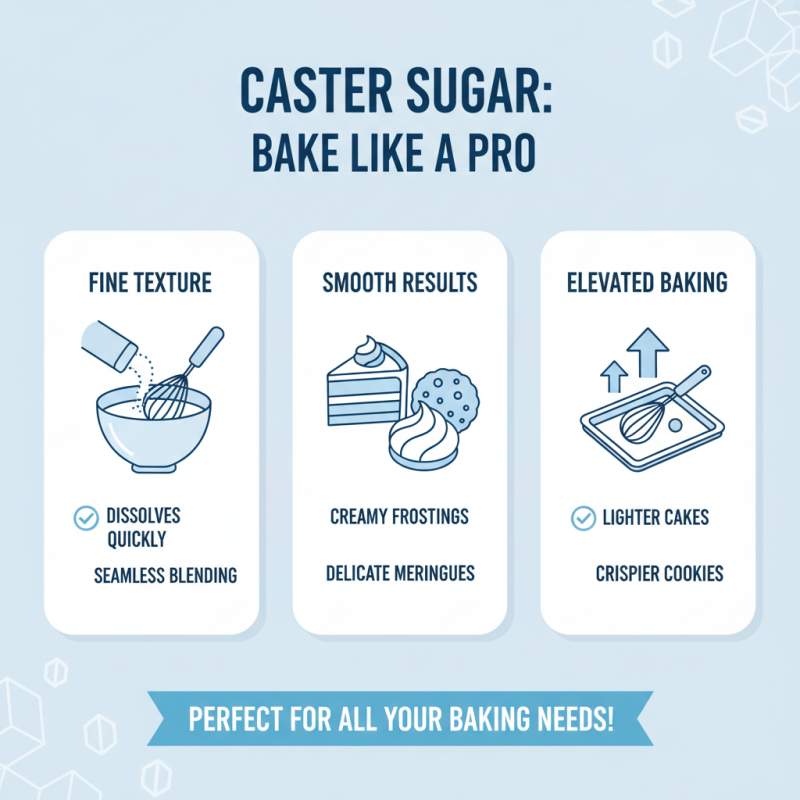
Caster sugar, known for its fine grain, dissolves quickly. This property makes it perfect for baking. It blends seamlessly into batters and frosting. Unlike granulated sugar, it creates a smooth texture, enhancing the final product. Caster sugar can elevate cakes, cookies, and even meringues.
Understanding its role is essential. While caster sugar is easy to find, substitutions may arise. Powdered sugar is a common alternative. However, it contains cornstarch. The texture may not be as light, and the sweetness could differ. Brown sugar is another option, giving a deeper flavor but altering the color and moisture.
Bakers sometimes overlook these details. Precision affects taste and appearance. When you swap sugars, consider the end goal. Sometimes, you might need to adjust the recipe. Experimentation is part of the process. Not every substitution will yield perfect results. That's the beauty of baking; it’s a journey of trial and error.
Common Substitutes: Granulated Sugar vs. Powdered Sugar
When looking for a substitute for caster sugar, granulated sugar and powdered sugar are common alternatives. Granulated sugar has larger crystals compared to caster sugar. It may not dissolve as quickly, which can be a disadvantage in some recipes, particularly in delicate meringues or fine pastries. However, it's readily available and can be a practical choice for everyday baking.
Powdered sugar, also known as icing sugar, has a much finer texture. It dissolves more efficiently in liquids, making it ideal for frostings and glazes. However, its high starch content can affect the taste in some recipes. According to industry reports, using powdered sugar in place of caster sugar can work, but it might alter the texture and sweetness levels slightly.
Baking often requires precise measurements. A switch from caster sugar to powdered sugar means a different volume. This can lead to a less than perfect outcome if not accounted for. Granulated sugar may need to be pulsed in a blender to mimic caster sugar's finer grit. Nevertheless, it may not yield the same results every time, so experimentation is key.
Natural Sweeteners: Exploring Honey and Agave Syrup as Options
When looking for the best substitutes for caster sugar, honey and agave syrup stand out. These natural sweeteners offer unique flavors and health benefits. The market for natural sweeteners has seen substantial growth. A report shows that the natural sweetener sector is projected to reach over $11 billion by 2025. This indicates a clear trend towards healthier alternatives.
Honey is often praised for its rich, floral taste. It contains antioxidants and has antibacterial properties. However, it is sweeter than sugar, so you'll need less. This can be tricky in recipes that depend on precise measurements. Agave syrup, on the other hand, has a more neutral flavor. Its lower glycemic index makes it a popular choice among those managing blood sugar levels. Yet, it can be easy to overuse due to its liquid nature.
Tips: When substituting honey for caster sugar, use about two-thirds the amount. For agave syrup, reduce the liquid in the recipe slightly. Keep in mind, both sweeteners can add moisture, which might affect the final texture. Adjustments may be necessary, so don’t hesitate to experiment. Balancing flavor and texture can be a challenge. Always taste as you go to ensure the right sweetness is achieved.
Quantifying Substitutions: Conversion Ratios for Effective Baking
When you run out of caster sugar, don't panic. There are several great substitutes. Each one will behave differently in your baking. Understanding the conversion ratios is key to successful outcomes.
Granulated sugar can be a straightforward alternative. Use one cup of granulated sugar for every cup of caster sugar. It might alter the texture slightly, but the sweetness remains intact. If you prefer, try blending granulated sugar briefly in a food processor. This can create a finer texture similar to caster sugar.
Brown sugar is another option. It adds a hint of molasses flavor, which could enhance your recipe. Substitute one cup of brown sugar for one cup of caster sugar. Keep in mind the moisture content. This might create a denser finish in baked goods. Adjust your other liquid ingredients if necessary. Each substitution requires practice. It's a journey of trial and error. Some results may surprise you, while others may fall short. Don’t hesitate to experiment.
Best Substitute For Caster Sugar: What Can You Use Instead?
| Substitute |
Conversion Ratio |
Notes |
| Granulated Sugar |
1:1 |
Common and easy to find. |
| Brown Sugar |
1:1 |
Adds moisture and flavor. |
| Honey |
3/4 cup for 1 cup |
Adjust liquid in recipe. |
| Agave Syrup |
2/3 cup for 1 cup |
Sweeter than sugar. |
| Maple Syrup |
3/4 cup for 1 cup |
Distinct flavor, adjust liquid. |
| Coconut Sugar |
1:1 |
Rich in minerals, caramel flavor. |